Vijay Kedia: The “SMILE” Investor Who Went From Heavy Losses to Multibaggers
Vijay Kedia lost heavily as a young trader in Kolkata, then became one of India’s best-known small-cap investors with his SMILE approach. His story, the companies that made his name, and why small-cap stock picking is harder than it looks.
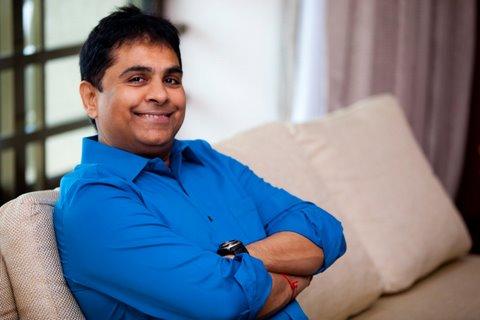
Photo: Musicandyou · CC BY-SA 3.0, via Wikimedia Commons
A painful start
Vijay Kedia was born into a Marwari family of stockbrokers in Kolkata. After his father’s death the family faced serious financial difficulties, and he began trading shares at the age of 19. It went badly: his early trading losses were large enough that the family had to sell jewellery to cover them. It is a common start for traders, and an unusual one for someone who would later be celebrated as one of India’s most successful investors.
Kedia later moved to Mumbai and changed approach, from short-term trading to researching companies and holding them for years. His first big success was Punjab Tractors, a company he chose after studying industry reports. Later winners included the cement maker ACC, and the profits gave him the capital to build a long-term portfolio.
The SMILE approach
Kedia sums up what he looks for with the acronym SMILE: companies that are Small in size, Medium in experience, Large in aspiration and Extra-large in market potential. In plain terms, he wants young but proven businesses, run by ambitious managers, in markets big enough to let them grow many times over. He has often stressed the quality and integrity of management, and the patience to hold through long periods when the share price does nothing.
In practice, that means looking for a company that is still small but has already proved its product, whose founders want to build something far bigger, and whose market leaves room for many years of growth. If such a company can grow its profits ten times over a decade, the share price can follow — a “multibagger”. Kedia has also said that an investor needs knowledge, courage and, above all, patience: the courage to buy when others are fearful, and the patience to wait years for the business to grow.
The companies that made his name
Kedia is best known for early stakes in companies that later multiplied in value, such as Atul Auto, a maker of three-wheelers; Aegis Logistics, which handles oil and gas products; and Cera Sanitaryware. Public shareholding filings at the end of 2022 showed stakes in companies such as Tejas Networks, Atul Auto and Vaibhav Global. He is managing director of Kedia Securities, and Indian media put his net worth at more than ₹800 crore in 2024.
Outside investing, he is known in India as a mentor to younger investors and as a musician. His public talks are popular because he speaks openly about his mistakes as well as his successes, which is rarer among famous investors than it should be.
For every small company that becomes a giant, many stay small or disappear. The skill is not just finding winners but surviving the losers.
What ordinary investors can learn
- Early losses are common; what matters is learning from them and not risking money you cannot afford to lose.
- Long holding periods, not frequent trading, produced Kedia’s best results.
- Small companies carry more risk: less information, fewer buyers when you want to sell and a higher chance of failure.
- We hear about famous investors’ winners, not the thousands of small-cap pickers who did worse than the market.
- Small-cap shares tend to fall much further than large companies in bear markets, so only money you will not need for years belongs there.
Kedia’s story is inspiring, but stock-picking in small companies is one of the hardest games in investing. If you believe in the growth potential of smaller firms, a low-cost small-cap index fund lets you own hundreds of them, so that the winners pay for the failures — without needing to be the next Vijay Kedia.
Read about Rakesh Jhunjhunwala
How India’s “Big Bull” built his fortune.
This article is educational and general in nature. It isn’t personalized investment, tax, or legal advice — always weigh your own circumstances, or talk to a licensed professional, before making financial decisions.
Keep reading
Related guides on this topic.
Ashish Kacholia: India’s “Big Whale” of Small-Cap Investing
Ashish Kacholia started as a broker and analyst, co-founded Hungama with Rakesh Jhunjhunwala and became one of India’s most-watched small-cap investors. His story, his approach, what his portfolio looks like, and why copying it is harder than it seems.
Legendary InvestorsRadhakishan Damani: The Quiet Investor Who Built DMart and Became a Billionaire
Radhakishan Damani left college after a year, made his name on the Mumbai stock market and then walked away to build DMart, one of India’s most valuable retailers. His story, his investing style, and what ordinary investors can take from it.
Legendary InvestorsRaamdeo Agrawal: The Co-Founder of Motilal Oswal and His QGLP Approach to Investing
Raamdeo Agrawal arrived in Mumbai to study accountancy, co-founded Motilal Oswal and became one of India’s best-known long-term investors. His QGLP framework, the Hero Honda and Eicher stories, and the lessons for ordinary investors.
Legendary InvestorsNick Train: Britain’s Quality-Stock Investor, His 25-Year Record and His Rough Patch
Nick Train built one of Britain’s best long-term records by owning a handful of great brands and rarely selling. Then came five years of painful underperformance. His approach, his numbers, and what his rough patch teaches every investor.
Legendary InvestorsWalter Schloss: The Value Investor Who Beat the Market for 45 Years Without Meeting a CEO
Walter Schloss never went to university, worked from a small office and owned dozens of cheap, dull companies — and compounded his investors’ money at about 15% a year for nearly half a century. How he did it.
Legendary InvestorsJean-Marie Eveillard: The Value Investor Who Refused to Buy the Dot-Com Bubble
A Frenchman in New York, Jean-Marie Eveillard turned $1,000 into nearly $45,000 over 25 years at the SoGen International fund, nearly losing his job along the way for refusing to buy technology shares in 1999. His record and his lessons.