Mohnish Pabrai: The Dhandho Investor Who Copies the Best Ideas
An engineer turned fund manager, Mohnish Pabrai built his investing around a simple bet — heads I win, tails I don’t lose much — and around openly copying the ideas of investors he admires, starting with Warren Buffett.
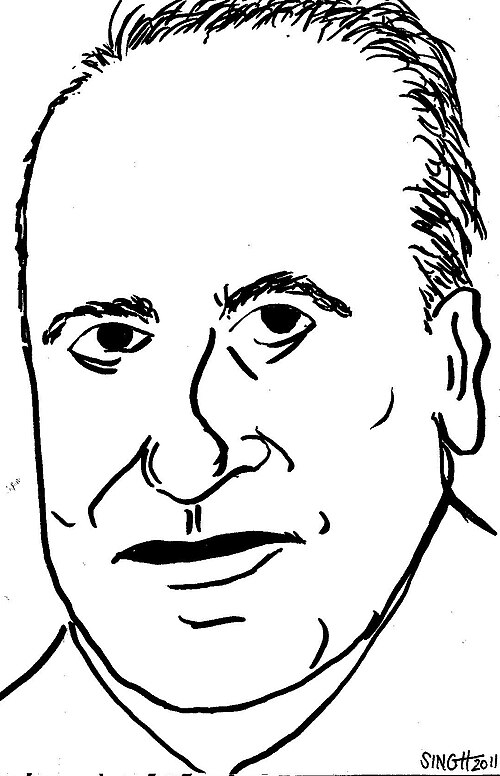
Photo: Fabarsi · CC BY-SA 3.0, via Wikimedia Commons
From engineer to fund manager
Mohnish Pabrai was born in Mumbai on 12 June 1964 and moved to the United States to study computer engineering at Clemson University, graduating in 1986. In 1990 he founded TransTech, an IT consulting and systems integration firm, reportedly funded with about $30,000 from his retirement account and around $70,000 of credit-card debt. He sold it in 2000 for about $20 million.
By then he had already found a new passion. After reading about Warren Buffett, he started Pabrai Investment Funds in 1999, modelled on the partnerships Buffett ran in the 1950s and 1960s: no annual management fee, with Pabrai taking a share of the profits only above a minimum return for his investors.
Dhandho: heads I win, tails I don’t lose much
“Dhandho” is a Gujarati word for business or enterprise. In The Dhandho Investor (2007), Pabrai describes how families from the Patel community, who arrived in the United States with little money, came to own a large share of America’s motels by buying simple, existing businesses cheaply, with little to lose and a lot to gain. He turned their approach into a framework for investing:
- Invest in simple businesses you understand.
- Look at businesses in distress or out of favour, where the price already reflects the bad news.
- Prefer businesses with a durable advantage, or moat.
- Make few bets, make big bets, and make them rarely.
- Look for situations where the downside is small and the upside large: heads I win, tails I don’t lose much.
The art of cloning
Pabrai is unusually open about copying. He argues that most investors waste time hunting for original ideas, when the portfolios of great investors are published in regulatory filings for anyone to study. He calls this “cloning”, and much of his career has been built on adapting the ideas of Buffett, Charlie Munger and others. In 2007 he and his friend Guy Spier won the annual charity auction for lunch with Warren Buffett with a bid of $650,100; the lunch took place in 2008, and both men have written and spoken about it often since.
Pabrai’s most useful idea for ordinary investors may be the least glamorous: you don’t need original ideas, you need good ones, and the best investors publish theirs.
Concentrated, contrarian and bumpy
Pabrai practises what he preaches about few, big bets. According to his US regulatory filing for 31 March 2026, his reported US-listed holdings were just three companies worth about $423 million in total: Warrior Met Coal (about 40%), Transocean (about 32%) and Alpha Metallurgical Resources (about 28%). That is a bet on steel-making coal and offshore oil drilling, industries most fund managers avoid. His funds also invest in other markets, such as India and Turkey, which do not appear in that filing.
A portfolio like this can do very well or very badly in any single year, and his results have swung widely. In 2023 he launched a fund open to ordinary US investors, the Pabrai Wagons Fund, which converted into an exchange-traded fund on 9 February 2026 and trades in New York under the ticker WAGN. As of September 2026 he oversaw about $1.4 billion across his private funds and the ETF. Outside investing, he founded the Dakshana Foundation, which finds gifted teenagers from poor families in India and coaches them for the country’s fiercely competitive engineering and medical entrance exams.
What investors can take from Pabrai
His framework is a good checklist for anyone buying individual shares: understand the business, insist on a margin of safety and avoid situations where you can lose a lot. His portfolio, though, with most of its money in a few companies in two cyclical industries, is not a model for most savers, whose first goal should be avoiding big mistakes. This profile is general education, not a recommendation to buy any fund or share.
Warren Buffett’s investment philosophy, explained
The investor Pabrai has cloned most, and the simple plan Buffett recommends for most people.
This article is educational and general in nature. It isn’t personalized investment, tax, or legal advice — always weigh your own circumstances, or talk to a licensed professional, before making financial decisions.
Keep reading
Related guides on this topic.
 Legendary Investors
Francisco García Paramés: The Spanish Value Investor Who Started Again at Cobas
Spain’s best-known fund manager beat the Madrid market by a wide margin for two decades at Bestinver, walked away in 2014, then spent five years underwater at his new firm before his funds came roaring back.
Legendary InvestorsDuan Yongping: The “Chinese Buffett” Who Turned $2 Million in NetEase Into $200 Million
The engineer behind the BBK electronics group retired at 40, moved to the US and became one of China’s most admired investors, buying NetEase near its low, Apple and Tencent. What he did, and what ordinary investors can learn from it.
 Legendary Investors
Benjamin Graham: The Father of Value Investing
Long before Warren Buffett was a household name, his teacher wrote the book that gave value investing its name — and its most durable idea: margin of safety.
 Legendary Investors
Warren Buffett: Investment Philosophy and Track Record
From a Nebraska newspaper delivery boy to the most closely watched investor alive — here's the philosophy behind Warren Buffett's six-decade track record.
 Legendary Investors
Bill Ackman: Activist Investor, Big Wins and Bigger Fights
Bill Ackman built Pershing Square from $54 million in 2004 into a firm managing about $28 billion, through concentrated bets, public campaigns and some spectacular wins and losses. In 2026 he took it public in New York.
Legendary InvestorsÁlvaro Guzmán de Lázaro: The Contrarian Who Bet Azvalor on Mines and Oil
A former Bestinver manager who co-founded Azvalor in 2015, Guzmán de Lázaro built one of Spain’s most talked-about funds by buying mining and energy companies when almost nobody wanted them, and sat through five painful years before it paid off.